The descent from the Eisenhower-Johnson Memorial Tunnel toward Silverthorne or Golden is one of the most demanding stretches of pavement in the United States. For commercial drivers, Interstate 70 is a gauntlet of steep grades, unpredictable weather, and high-altitude mechanical stress. When a massive tractor-trailer loses control and its trailer swings out like a folding pocketknife, the results are almost always catastrophic for surrounding passenger vehicles. At Lampert & Walsh, LLC, we understand that a jackknife is rarely a “random” event. It is the culmination of either a mechanical breakdown or a catastrophic lapse in judgment. Navigating the aftermath of a mountain corridor wreck requires an I-70 truck accident lawyer who can distinguish between a sudden brake failure and a driver who ignored the warnings of the road.
The Anatomy of a Mountain Jackknife
A jackknife occurs when the drive wheels of the tractor lock up while the trailer continues to move forward with momentum, causing the vehicle to fold at the coupling. On the steep inclines of the Rockies, this often happens during emergency braking or when a driver takes a curve too fast for the weight of their load.
According to the Federal Motor Carrier Safety Administration (FMCSA), brake-related issues are cited in approximately 29 percent of all large truck crashes. On I-70, this risk is magnified. The “Lower Straight Creek” ramp at mile marker 209 is statistically the most used runaway truck ramp in the country, a testament to how frequently commercial systems fail on these grades.
Brake Failure vs. Driver Error: The Primary Factors
| Factor | Primary Cause | Legal Implication |
|---|---|---|
| Brake Fade | Mechanical / Overheating | Potential for commercial brake maintenance claims |
| Speeding on Grades | Driver Error | Violation of CDL mountain driving rules |
| Improper Downshifting | Driver Error | Negligence per se under Colorado law |
| Faulty Adjustment | Mechanical / Maintenance | Liability for the trucking company/mechanic |
Investigating the Jackknife: Was it Mechanical?
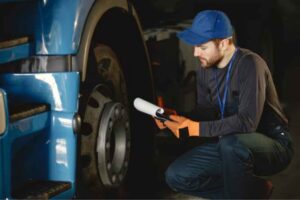
When we investigate a jackknife on the mountain corridor, the first question is whether the truck was fit for the climb. High-altitude environments place extreme thermal stress on air brake systems. Commercial brake maintenance is not just a suggestion; it is a federal requirement under 49 CFR § 396.3.
The Science of “Brake Fade”
On long descents like Vail Pass or the Floyd Hill area, drivers who rely too heavily on their service brakes rather than engine braking (Jake brakes) will experience “brake fade.” This occurs when the brake pads and drums become so hot they can no longer generate the friction necessary to stop the vehicle.
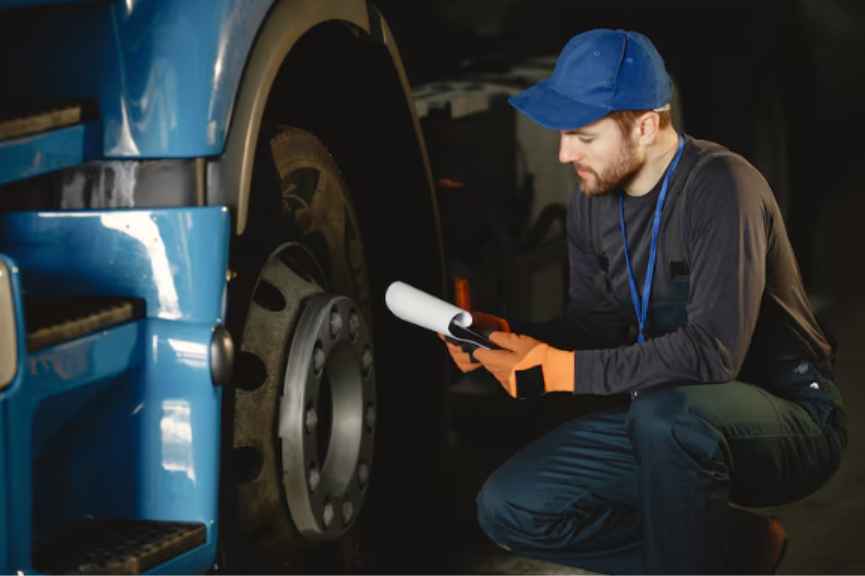
If a truck jackknifes because the brakes were out of adjustment or the drums were worn beyond legal limits, the trucking company may be held liable for failing to perform required inspections. Our specialized Denver truck accident lawyer will subpoena the maintenance logs and post-crash inspection reports to see if the “S-cams” or slack adjusters were failing long before the truck reached the tunnel.
Driver Error and CDL Mountain Driving Rules
Colorado has some of the strictest CDL mountain driving rules in the nation. Commercial drivers are expected to be professionals who understand the physics of mountain transit. Driver error in a jackknife scenario often involves:
- Inadequate Surveillance: Failing to anticipate traffic backups at the bottom of steep grades.
- Over-Braking: Slamming the brakes on an icy or wet mountain road, which triggers the drive-wheel lockup.
- Hours of Service (HOS) Violations: Fatigue is a massive factor on I-70. A tired driver is more likely to miss a gear or wait too long to engage in their secondary braking systems.
Data from the Colorado Department of Transportation (CDOT) indicates that traffic fatalities in Colorado rose to 701 in 2025. While many factors contribute to this, the presence of heavy commercial vehicles on narrow, winding highways remains a primary concern for public safety.
Runaway Truck Ramps and Liability
Colorado is home to 13 runaway truck ramps. These are designed as a last-resort safety net for drivers who have lost their brakes. A significant legal question in I-70 litigation is runaway truck ramps of liability.
If a driver realizes their brakes are failing but chooses to bypass a clearly marked ramp, often out of fear of the towing fees or the damage to the truck, and subsequently jackknifes into traffic, that decision constitutes gross negligence. Transportation authority’s commonly emphasize that safety or escape ramps are free to use in emergencies. Failing to use a designated safety ramp when a vehicle is in distress can be considered a breach of a driver’s duty of care to others on the roadway.
Mountain Trucking Regulations in Colorado
To combat the unique dangers of the high country, mountain trucking regulations CO mandate specific behaviors. For example, during the winter months (September 1 through May 31), the “Chain Law” is frequently in effect on I-70.
Failure to carry or use chains is more than just a ticket; it is evidence of negligence if the truck loses traction and jackknifes. Furthermore, Colorado law requires drivers to pull into “Brake Check” stations located at the summits of major passes. Skipping these mandatory checks is a direct violation of safety protocols and is a key piece of evidence used by an I-70 truck accident lawyer to prove fault.
Securing Justice After a Mountain Corridor Crash
The majestic views of I-70 can turn into a scene of horror in the blink of an eye when a commercial vehicle fails. Whether the cause was a company cutting corners on commercial brake maintenance or a driver ignoring CDL mountain driving rules, the victims deserve a legal team that understands the weight of the evidence. We have spent years fighting for the rights of those injured on Colorado’s highways. We know the tactics trucking companies use to hide their mistakes, and we have the resources to uncover the truth. If you or a loved one has been a victim of a jackknife or any other commercial wreck, do not face the corporate giants alone. To learn how we can help you recover and hold the negligent parties accountable, please contact us today for a free, confidential consultation.
Frequently Asked Questions (FAQs)
Is the truck driver always at fault in a jackknife accident?
While the driver is often the primary focus, they are not always 100% at fault. Liability may also fall on the trucking company for poor commercial brake maintenance, the manufacturer of a faulty part, or even the crew that improperly loaded the trailer, causing it to be top-heavy.
What should I do if I am hit by a truck on I-70?
First, seek medical attention. Second, ensure the police document the scene and inspect the truck’s brakes immediately. Third, contact us as soon as possible to send a “spoliation letter” to the trucking company, which legally prevents them from destroying evidence like the truck’s electronic data or maintenance logs.
How do you prove the brakes failed?
We work with accident reconstruction experts and mechanical engineers who inspect the brake drums, shoes, and air lines. We also analyze the truck’s “Black Box” (Electronic Control Module) to see the speed and braking pressure at the exact second of the crash.
Can I sue for a jackknife if the road was icy?
Yes. CDL mountain driving rules require professional drivers to operate at a speed that is safe for the actual conditions, not just the posted speed limit. If a driver jackknifes on ice because they were going too fast, the weather is not an excuse for their negligence.
Why is the 1-year statute of limitations mentioned in some cases?
While standard auto accidents have a 3-year limit in Colorado, if your truck accident claim involves “Dram Shop” liability (e.g., a driver was overserved at a bar) or certain government entities, the deadline to act is much shorter. Always consult an I-70 truck accident lawyer immediately to protect your rights.